Line choice is usually presented as a ranking, with braid at the top. It is not a ranking. Each construction trades sensitivity against stretch, visibility against abrasion resistance, and price against how long it stays usable. Matching the line to the water is what matters, and the same angler will want three different ones in a season.
Braid: sensitivity, and what it costs you
Braided PE line has almost no stretch, which is the whole argument for it: you feel the bottom, you feel a take, and you set the hook directly instead of through a shock absorber. The 8-Strand Braided PE Line ($12.99) is the standard eight-carrier construction, and more carriers means a rounder, smoother spool - which is why eight beats four on casting distance.
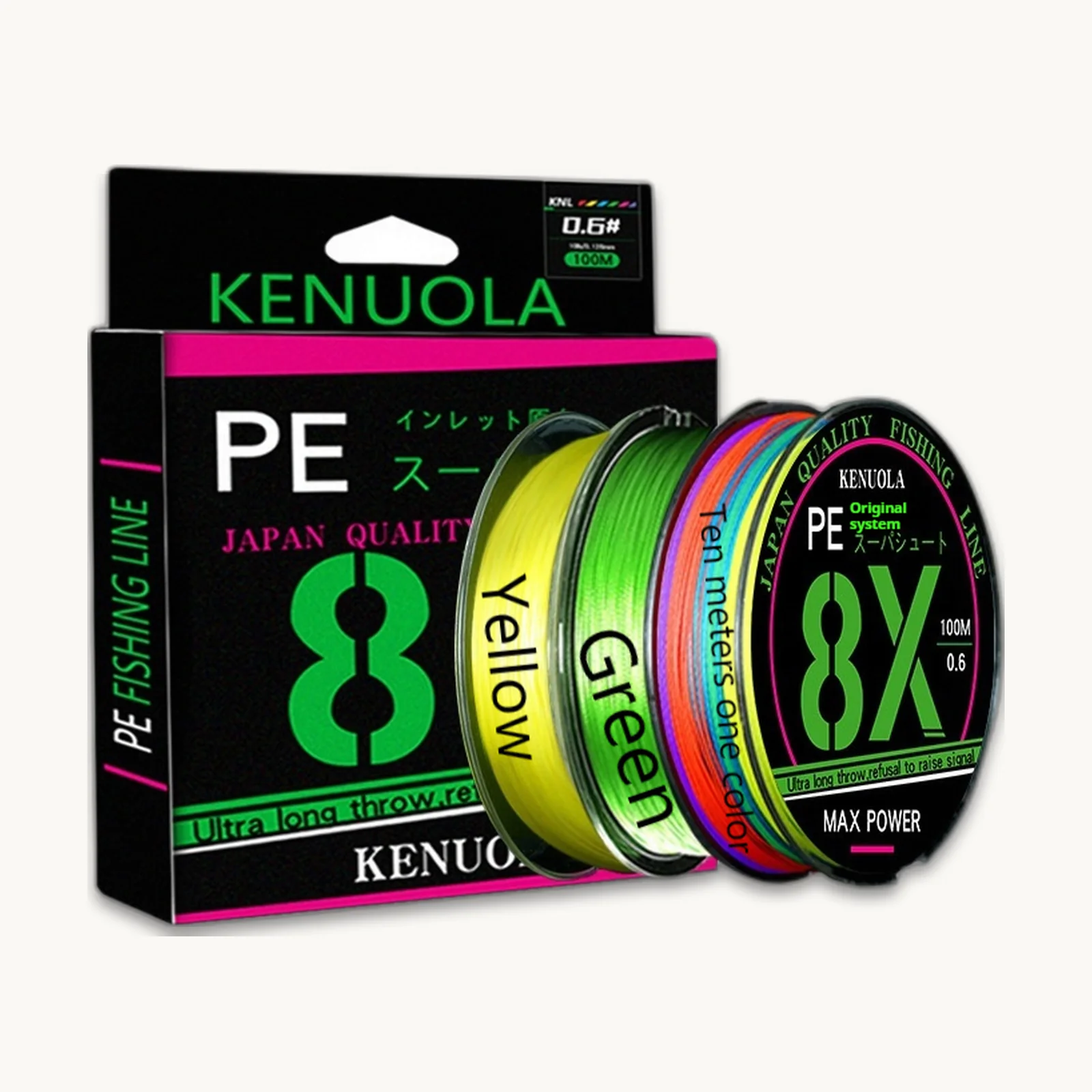
What braid does not do is break invisibly. It is visible in clear water, and it will not stretch when a fish surges, so a hard-fighting fish on light braid can pull hooks. Anglers in clear water usually add a leader rather than switching back to mono.
Nylon: stretch, and the reason it still wins
Monofilament stretches - typically twenty to thirty per cent before it parts. That stretch is a shock absorber: it protects light hooks, forgives a clumsy strike, and survives contact with rock and timber far better than braid. The Abrasion-Resistant Main Line ($12.99) is the plain workhorse; the 1000 m Camo Line ($13.75) is the same construction with a low-visibility colour shift and enough spool for a full season of respooling.
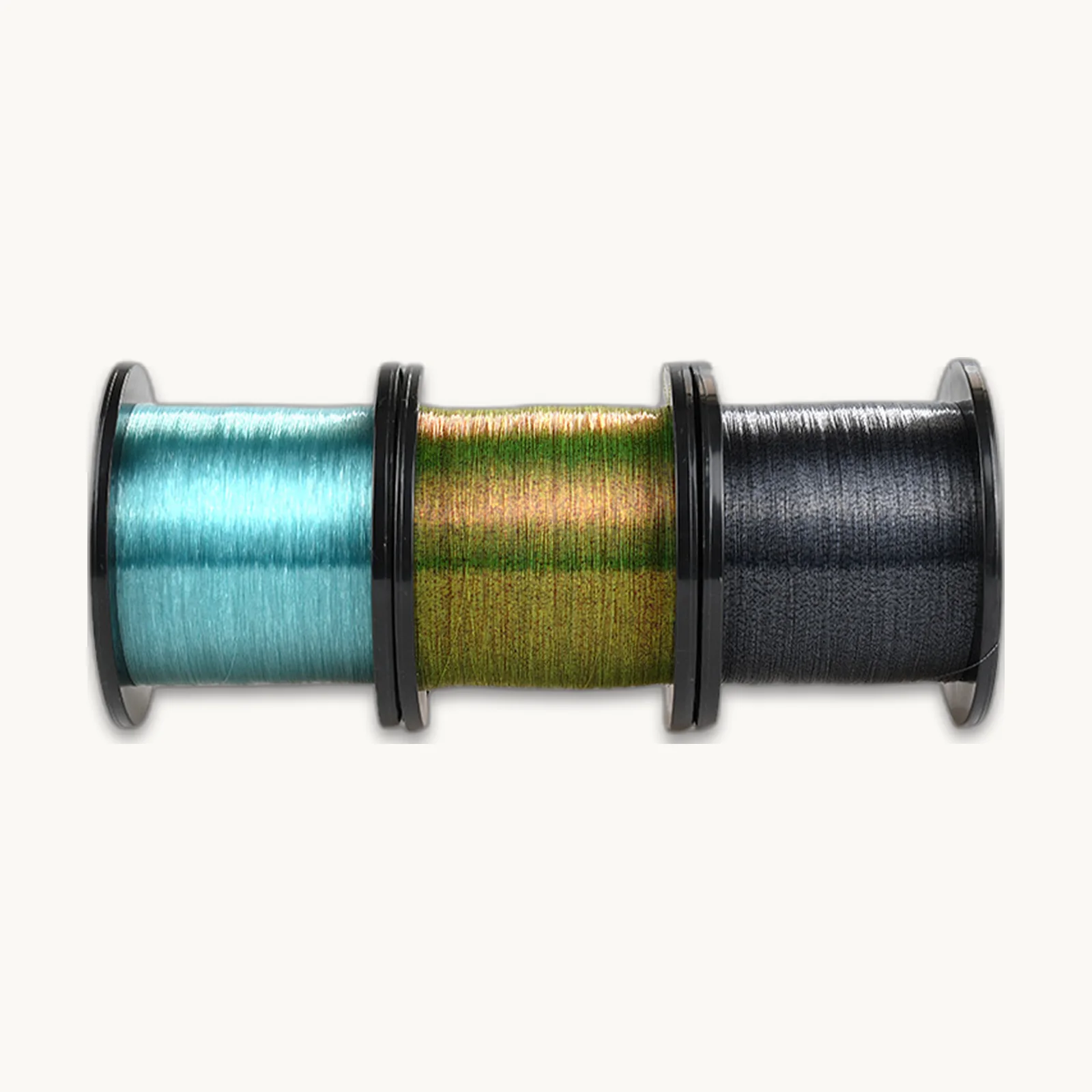
The trade is sensitivity: mono transmits far less of what the lure is doing back to the rod tip.
Carbon-coated: the middle that suits most people
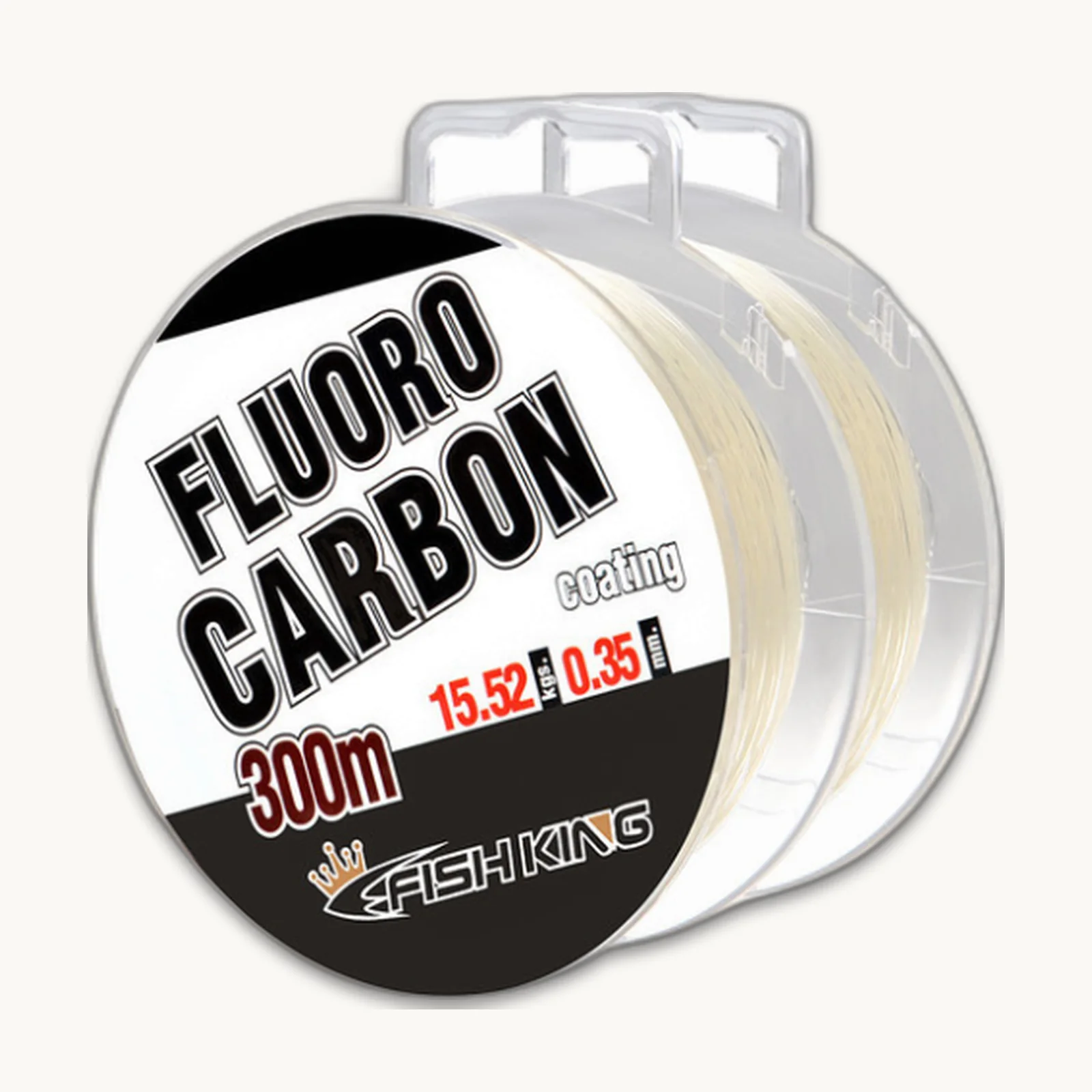
A carbon-coated line takes nylon's core behaviour and adds a harder outer layer, which raises abrasion resistance and lowers water absorption. The Carbon-Coated Fishing Line ($12.99) is the sensible default for someone who fishes mixed water and does not want to carry two spools. It will not match braid for sensitivity or mono for stretch; it sits between them and asks nothing in return.
Fly: backing, weight and taper
A fly setup is three parts, and beginners buy the wrong two. Backing is the thin, strong line filling the spool so that a long-running fish does not take you to the end - the Fly Fishing Backing Line ($12.99) is 50 m at 20 or 30 lb, which is ample for anything a first rod will hook.
Over the backing goes the fly line itself, and the taper is the part that matters. A Forward-Taper Floating Line ($12.99) concentrates weight toward the head, which turns over a heavier fly and presents better at distance. A Multi-Colour Floating Line ($12.99) puts colour changes along its length so you can see how much line is out - a genuinely useful thing to have while you are learning to cast.
The small part that saves the session
Swivels are unremarkable and constantly forgotten. A tin of Q-Type Swivel Connectors ($8.55) stops line twist building up behind a lure, which is the most common reason a spool that was casting beautifully an hour ago is now tangling on every retrieve.